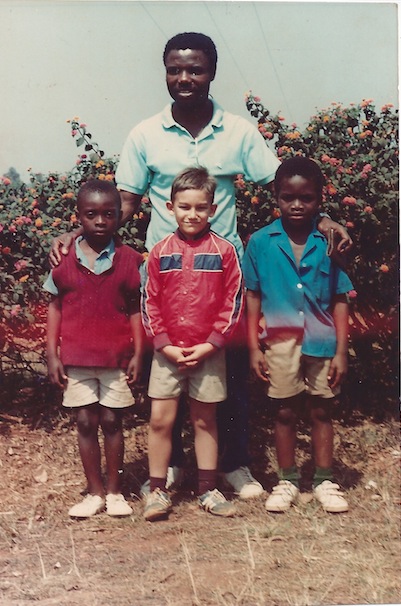
-
Another unarmed man is dead,
Another neighborhood gone,
And what for?I must be sad, I say to myself.
But no longer are there feelings.Only the idea of feelings.
I buy my feelings from those who have them.
But they say it’s been a good year,
And just today, in front of Starbucks,
I gave a dollar to the homeless man,
With a noose around his neck.© Ramin Gillett
-
The end of the day is near,
and I’m flipping through the channels,
Searching the airwaves,
For some semblance of truth.Above the talking heads of the men in charge,
Beyond the voices who know it all,
Through the barrage of noise,
I finally find what I’m looking for.My soothsayer.
My truth teller.It’s written all over her face,
Tears as real as cicadas,
screeching outside my window.I try to say something,
But the cacophony of men,
Drowns me out.Are you there? she asks.
Yes I am, I shout back.
Why are you crying? I ask.She says something, but I can barely hear her.
She is holding a piece of paper, something official.
She points to it and starts screaming again.What is it? I ask but she can’t hear me.
She closes her eyes as though to compose herself.She starts shouting again,
And this time,
All the talking stops.I lost my daughter today, she says.
The piece of paper – $20.64.
Was her daughter’s last paycheck.© 2020 Ramin Gillett
Photo by Marta Dzedyshko on Pexels.com -
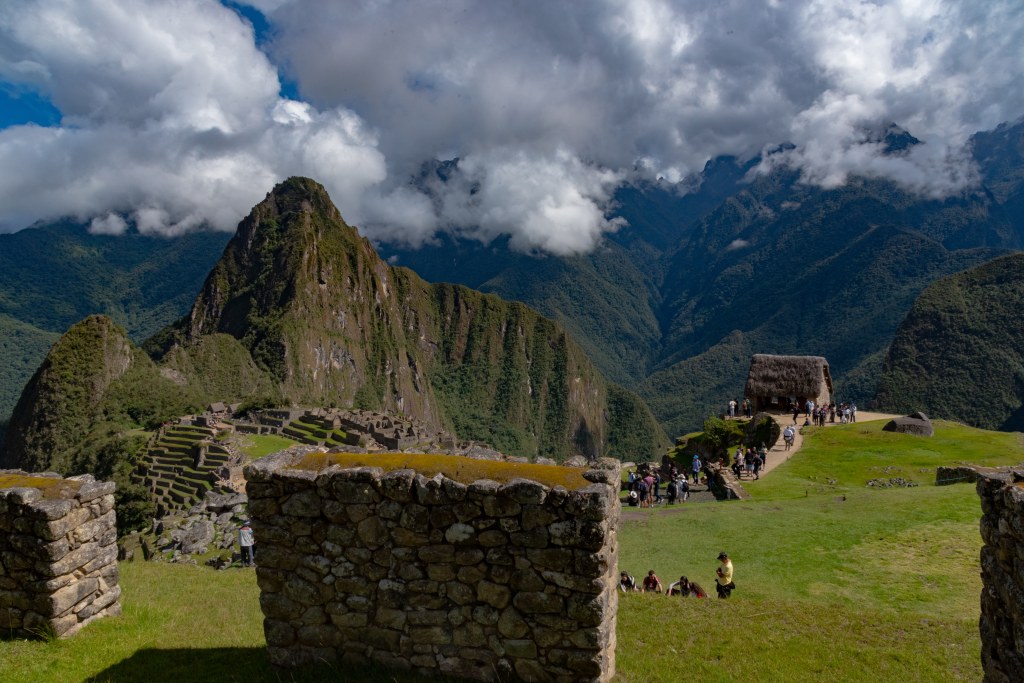
I still remember those quiet afternoons leafing through old copies of National Geographic magazine in the stuffy basement of my grandparents’ house in Maryland. My parents didn’t travel much, but that was the one big trip we made every year. Unlike me, they had a habit of napping after lunch, and I spent that time rummaging through those dusty magazines, engrossed by how mysterious the world had become. Ancient ruins of Angkor Wat, giant statues on Easter Island, modern day tribes in Kurdistan. It was also the first time I saw a picture of Machu Picchu, and I never forgot it.
On a cool misty morning more than two decades later, divorced and searching for a new beginning, I boarded a bus in the rustic hillside town of Aguas Calientes. Tucked away high up in the Peruvian Andes, this backpacker’s refuge was my final stop on a journey that had started two days prior in Gainesville, Florida.
I woke up at 4:30 that morning in my hotel room, adrenaline pumping through my veins. I washed down an ordinary western breakfast with coffee and freshly squeezed orange juice, grabbed my backpack and made my way through narrow cobblestone streets to the bus terminal teaming with wide-eyed tourists. Next to me was a young lady who turned out to be from Poland. She was about my age with brown hair and hazel eyes that evoked a longing hard to put into words. When the bus took off, I asked my Polish neighbor if she was meeting anyone up there. She took a deep breath and replied, “no.”
“This is for me,” she said without further elaboration.
“Is that an English accent I detect?” I later asked.
“Well,” she said, smiling. “I lived in England for a few years.”
As the bus looped around the muddy road and we began approaching the clouds, I started to catch glimpses of that picture I saw long ago in my grandparents’ basement, fluttering in and out like a distant hummingbird.
To finally behold Machu Picchu is to approach something magnificently sublime. There are few places in the world where feeling precedes sight itself. From that first observation point, my Polish companion and I gazed into a world that was as foreign as it was familiar. Mist was gently rising over the mountain top, and granite walls still intact five hundred years later shimmered in the morning sun.
As we continued to higher ground, long lines of people were waiting to take selfies. A young couple, lying against a terrace, had their eyes closed. I wanted to ask my new friend what had brought her here, but it felt obtrusive. We eventually lost track of each other, and I made my way up the terraces for a better view.
We ran into each other again on her way back down from the Sun Gate. Her face was beaming with excitement.
“I couldn’t make it all the way,” she exclaimed.
“Maybe I’ll go for it,” I offered.
“Do it for me too,” she said.
An hour later, sweaty and breathless, I finally found the Sun Gate. I was over nine thousand feet high. A cool breeze washed over my damp shirt. In the distance, stood the Sanctuary- ancient, regal, and very much alive. In broken Spanish, I spoke to one of the guides who was kind enough to tell me that the Sun Gate was the original entry point to Machu Picchu. I took a few pictures hoping to run into my friend again, but that was the last time I saw her.
On the bus ride back that night, I sat next to an Italian couple and a young lady from Canada with close cropped hair who later shared that she had gotten over a serious bout of cancer and now cherished each day as though it was a gift. We told each other stories and laughed at our cultural stereotypes.
After we parted ways, as I walked back to my hotel room with only the moonlight as my guide, I thought of our Inca forebears, and how little they truly knew centuries ago of what they had gifted us that day, even for my Polish friend.
-

When I was 18, I moved to the states from a small town in the western highlands of Cameroon where the seasons are either rainy or dry, where children chase grasshoppers under pale street lamps, frying them later till they are golden brown and crunchy, where people are always ready to lend a helping hand but police require money before coming to your assistance, and where there are over 230 languages but everyone speaks pidgin.
I tend to forget that I am an immigrant because my father is American, and to most Americans, I do not stand out as being particularly foreign. To laymen’s ears I have an indistinct American accent that baffles people as to where I come from, and a skin tone that classifies me as “white”. Because of these superficial and deceptive traits, my gateway to American anonymity, I am very much an impostor.
I am reminded of this whenever conversations shift to football (the American version), baseball, or basketball. My knowledge of these sports is quite shameful, so please spare me the jargon. I have learned that if people are given ample opportunity to articulate their passions, very few will ask you where your loyalties lie. They will naturally assume you share their same opinions.
When I was a freshman in college, the entire floor of my dorm thought I was from Cancun. You can imagine why. The similarities are quite compelling. It took many conversations before that misconception was cleared up, but again, it never did. I just became that kid from South Africa.
It doesn’t matter where I live. I will always be an immigrant, and I will be the closest thing people can identify with. For most, that would be the United States, until the question is asked: “Where are you from?” Such a simple question, and yet it isn’t. I could say Iowa, and very few people would bat an eyelash.
Recently, I saw on the news that Africans were experiencing some prejudice in light of the recent Ebola outbreak in the US. I began to feel at odds with the whole thing, as though I was missing out on something I should be experiencing. This was another imposter moment for me, where all I’d have to do was change my accent and the color of my skin, and you might very well see people running for the hills, and the words “Ebola! Ebola!” ringing across this land.
Alas, my pale skin and impostor ways relegate me to a life of unprejudiced acceptance. I can be a fake many things: a fake Persian, a fake American, and sometimes a very fake Cameroonian. In truth, I am simply a diluted version of many things. Or maybe, I am just the future of all of us.
-
The responses I have gotten from readers around the world, despite vast cultural, ethnic and I dare say racial differences, is a testament to universal brotherhood and sisterhood. It is astonishing to realize just how far we have come in the last hundred years that the experiences of a white boy from an obscure town in West Africa would capture the interest of people from more than 77 countries, as far-flung and diverse as Mauritania and Barbados. Even more fascinating is that 153 years ago, I had family members who fought alongside the confederates in the American Civil War!
In the second decade of the 21st Century, here I sit, writing to you about my personal experiences that, at one time, would have secured my death or at the very least garnered me the badge of a traitor. And there you are, in all your beautiful shades of our human experience, reading what I have to say, because either you have felt something similar, or have found something here that resonates with you. No matter the reason, it is clear that you and I are not totally defined by the color of our skin. However, we must acknowledge that for many of us, it is the fiction of race that has created that tension around us, leaving its mark in the recesses of our psyches.
One reader recently wrote that after moving to the States, he became an inhabitant of that “middle world of not being able to be fully one thing.” That is truth- beautiful in it’s simplicity. It’s beautiful not to be tied down to just one “thing”. In a sense, one becomes liberated from the shackles of race, culture, and ethnicity, allowing one to embrace something much larger, something more human. You see, people in the middle world don’t care about other people’s cultural hang-ups. They only care that they can connect with others, and in doing so, are able to tap into that fundamental thread that binds us together. They are at the vanguard of a new (hu)man, whose loyalty cannot be easily defined. His home is nowhere and everywhere.
However, this freedom does not come easily. It is earned through moments of deep frustration and angst. Imagine you have just entered a large ballroom where everyone is dancing in that way you were once so familiar with. As you join the festivities and begin to dance, you realize just how off you are, and the more you try, the farther you get from everyone else. So, you try even harder to stick to the moves and the rhythm you once knew, and as things slowly get better, you realize something about yourself. You have become a fake.
That, my fellow middle world dwellers, is your bildungsroman.
There’s another simple truth that one must recognize, and it is this: growth and tension are two sides of the same coin. Growth is never a comfortable process, and in the end, something is always sacrificed. Think of the seed whose shape and form must be abandoned in order for the sprouts to appear and the sapling to take root. Like the seed that loses its very own structure, yours is also an abandonment of sorts- an abandonment of the fiction of race and nationality that sets you free to embrace the world around you, to be okay with the mislabels, because they are simply an opportunity to invite others into the middle world, where one is no longer tied to just this or that, where we are all happy to be simply called human beings.
-

I was ten when my father’s country invaded my mother’s. It was 1991, and the United States had taken upon itself to do something about Iraq’s aggression in Kuwait. My parents and I were, by nature of where we lived and their unique global worldview, far removed from the events that were occurring thousands of miles away. We didn’t have a television set at the time, and so we watched the events unfurl from our neighbors’ house. We huddled around their television, and in the background I overheard the grownups talk about oil and America’s supremacy. I didn’t quite understand what was going on, but the images of American tanks and fighter jets told me just how Ramboesque America was. It was a grand show of muscle, and the whole thing was over as soon as it began.
My mother never talked about Iraq, or what it was like growing up in Baghdad. She left home after finishing college, and went to live with relatives in Iran. Beyond that, Iraq is a blank sheet of paper in the story of my life. I imagine I have family there, some who have probably perished in the war that has come to characterize day-to-day life for many Iraqi citizens. I imagine too that I have had distant relatives serving on the American side, who have also died. I don’t know who any of them are, but I imagine they too loved their families, and wanted what was best for them.
Like America and many Americans, I am a product of cultural mélange. We are, after all, a nation of immigrants, and to be American is to have a multiplicity of origins. Despite this similarity, there is one thing that sets me apart: I am as incapable of subscribing solely to one national narrative, as I am of speaking only in one language.
What I’m talking about is a profound inability to love one country or people over another. Maybe it is an outgrowth of my parent’s marriage, my childhood, and my religious and spiritual convictions, but I have found it relatively easy to let go of certain social constructs. Belonging can very much be a choice one makes, and what we choose to belong to, is a reflection of who we are and what we aspire to reach.
Part of my heritage on my mother’s side is Iranian. She also happens to be a member of the Baha’i Faith, a community that has historically been shunned and persecuted in Iran. There is currently a group of seven Baha’is serving a 20-year sentence in Iran, simply because they happen to identify themselves with that Faith. I recently came across a letter one of them wrote to his first grandchild who was born in April of this year. In it, he tells her, “My dearest granddaughter…I want you to know that I am proud to be imprisoned. Divine tests are a sign of God’s mercy. I don’t want you to ever bear any ill will toward your countrymen.”
We don’t know enough about those we call our enemies, and they probably know even less about us. It is much easier to hate what one is ignorant of, and so we rely on objectification to remove any sense of humanity we might have had for them. We do this at many levels. I sometimes wonder how much suffering would be alleviated if we came to see everyone, even those who claim to be our enemies, as noble beings, as family members we lost touch with a long time ago.
-
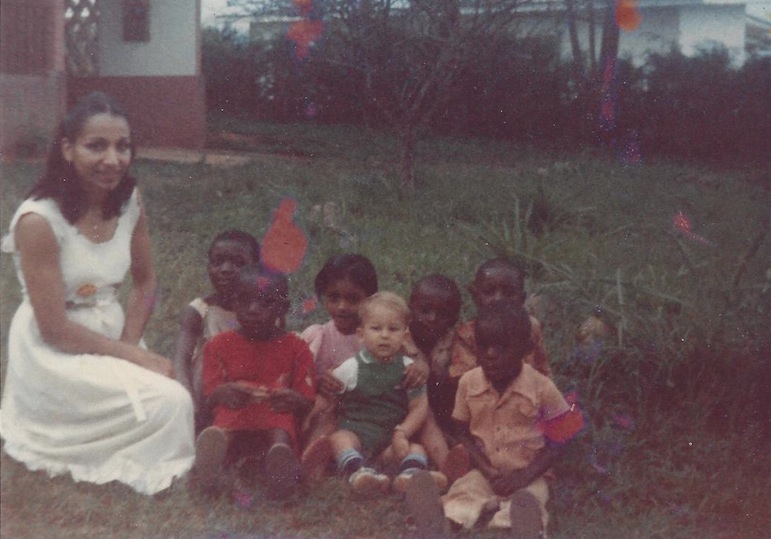
Where are you from?
Cameroon.
Cameroon? But you are white.
Yes, I know that.
Ok, but where are you really from?
Cameroon
Ok, you’ve said that, but where are your parents from?
Iraq and America.
So, what are you… American or Iraqi?
I don’t know. Does it matter?
Yes!
Why?
Because, you have to belong somewhere!
I belong everywhere.
You must be an American!
Why?
Because, you talk like an American.
I do? If I talk like a Cameroonian, that means I am Cameroonian?
What does your passport say?
American
Then, you are American!
Ok. I am American, but I am also many other things.
You cannot be two things at once.
Why not?
Do you vote in American elections?
Yes. Why?
So you voted for Bush.
My voting is my concern.
I’m not saying you, Ramin, voted for Bush. I’m saying your people voted for Bush.
My people? What’s your point?
Your people destroyed Iraq.
It wasn’t everyone’s choice. Many people protested the war.
Yes, but the people voted for Bush, and he wanted oil for the cars your people drive.
Listen, what are you getting at? This doesn’t make me responsible for the things a few people did.
It doesn’t matter what you want Ramin. You can think you are Cameroonian, but you can only vote in American elections. You only determine what happens in one country.
And the people in Cameroon? Do they determine what happens in Cameroon, even though they have, quote unquote, voted for the same man for the last 30 years?
Yes, they do.
They do, but not politically. There’s more than one way to determine what happens in the world. You might think that politics alone determines where someone belongs, but you are absolutely wrong. Blood, not politics runs through our veins, and after all, you of all people should know that we are all children of Adam. I am no less African than you, sir!

-

In the evening, the lonely tractors near our house
smell cold, and remind me of money that goes clink clink clink,
and that place daddy takes the car on quiet sunny mornings.I pull myself up the side and climb unto the broken leather seat.
The wheel is as big as a mountain you can pinch from far away.Up. Down. Left. Right.
The stick does not listen, but the round ball feels smooth like mommy’s dress.
Up. Down. Left. Right.
Don’t mess with me ‘cause I can run you over.
The grass in the distance is so tall
they call it elephant. Elephant grass.Don’t walk in elephant grass at night! Snakes will find you!
I am afraid of snakes, and so are chickens,
but I saw a chicken die once.
Daddy took a knife to its throat and sliced it sideways.It melted like butter.
One afternoon, I saw what a rock did to a man’s head.
He was naked on the side of the road with his arms stretched out like Jesus.No one cried the way mommy cries sometimes,
but she doesn’t know I see her through my fingers.Fireflies fill the air like mist.
Their tiny bellies flicker in the cool air,
and I know it’s time to go home. -